Building a comprehensive Requirements Engineering
Before we start buildinga complete CRM System with Limbas, let’s start with what with the most important question first: What needs to happen so that we can say at the end: This project was it worth doing!
Usually we are doing this in a kind of workshop. There are multiple different formats of those workshops aavailable. At the end the outcome counts and how close this outcome can server both customer and designer/developer to perceive/create the right product!
In a high level summary we collect the most important user stories which have been identified during the requirements workshop.
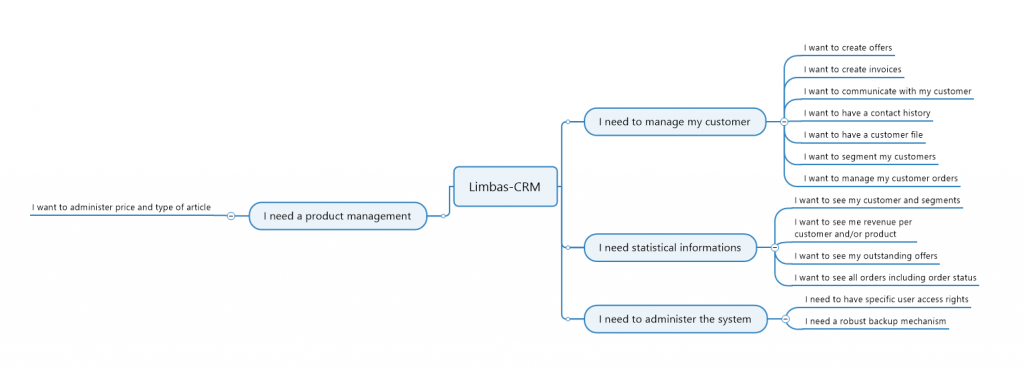
While these rudimentary customer requirements will certainley evolve over time, it is a good starting point to start the requirements egnineering part. One option, or tool, to do this is openProject.
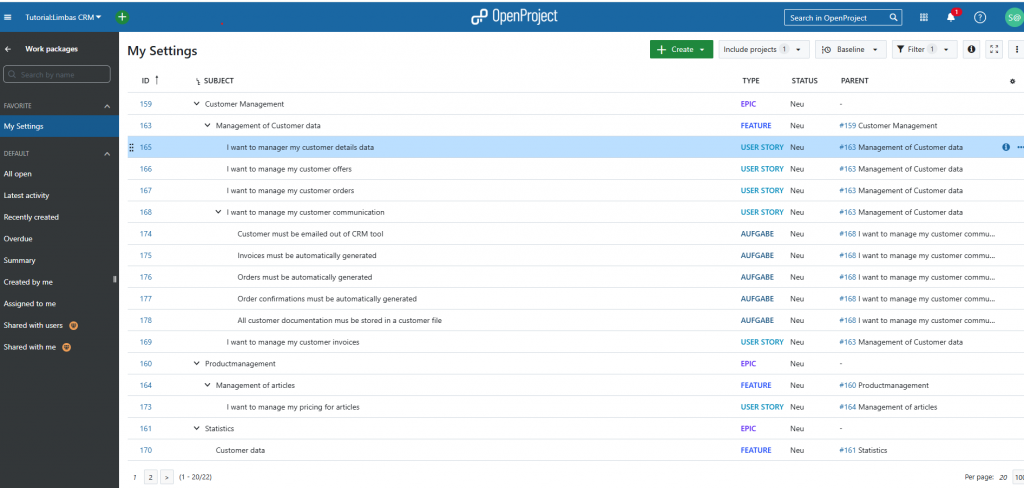
Agile requirements engineering focuses on delivering value early and continuously while allowing requirements to evolve as new insights emerge. Using artefacts such as Epics, Features, User Stories, Tasks, and Items provides a practical structure for managing requirements at different levels of detail. Epics help align work with business goals, Features define meaningful system capabilities, and User Stories capture user needs in a clear and testable way. Tasks and Items break stories down into concrete, manageable work that teams can plan, track, and deliver within short iterations. OpenProject is well suited to this approach because it supports hierarchical work packages, end-to-end traceability, and agile planning tools such as backlogs, boards, and sprint planning. This enables teams to collaborate effectively, maintain transparency across stakeholders, and adapt requirements throughout the project lifecycle without losing control or visibility.
Let’s see what we have so far in terms to draft a first requirements engineering project in openProject. For sure this will extend going forward and is very uncomplete yet. But as a starting point it gives us guidance on how to start the implementation in Limbas.